
Cobute’s precast beam system consists of two L-shaped light concrete elements (20–37 kg/m).
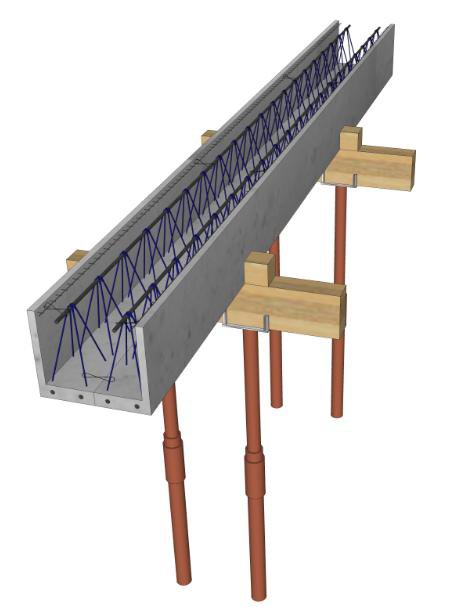
Cobute precast shutters for beams consists of two light concrete L-shaped elements (20-37kg per linear meter), with the main reinforcement in the precast element.
WIDTH
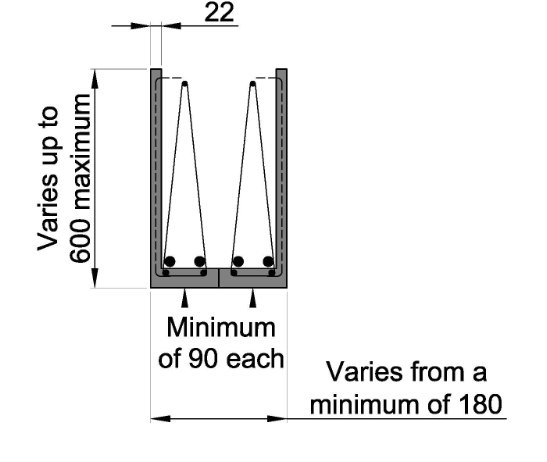
The Cobute beams can cover any possible width. The Cobute shutters cover the width from 180- 350 mm in two elements, going through intermediate sizes. For width greater than 350 mm, it’s possible to introduce a 3rd member or a panel to meet the design requirements.
DEPTH
The height of the side panel goes from 50 mm-600 mm. Depth greater than 600mm can be accommodated.
HORIZONTAL SHEAR
The horizontal shear between the bottom heel of the precast element and the in situ concrete is transferred by the stirrups and the link between the side panels and the in situ concrete is provided by the mesh. In the compression zone, both the precast and the in situ concrete are in compression and any potential delamination will be more than dealt with by the galvanised mesh protruding from the precast side panel.
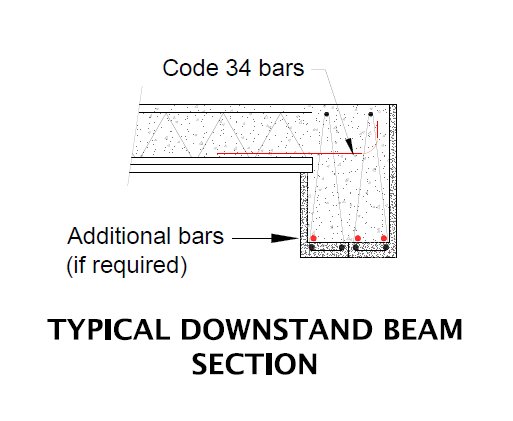
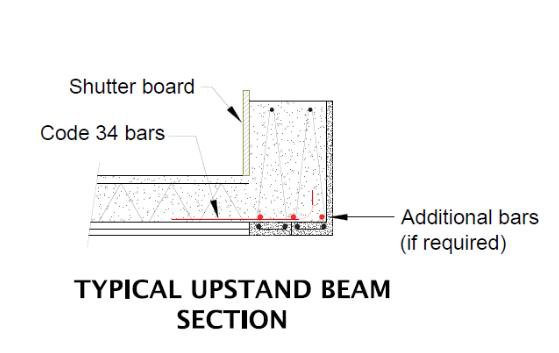
The beams were tested to failure by the Department of Civil Engineering at the University of Cape Town
(UCT) on behalf of Cobute in 2004 have shown that R.C. beams constructed using the Cobute precast system have a higher bending moment capacity (approximately 10%) and practically the same shear strength capacity, compared to conventionally cast beams.
Links are inclined and the standard ones are 5,6mm diameter at a fixed spacing of 225mm. Both the diameter and the spacing can be varied if required although it is recommended that the spacing is not varied but, if necessary, extra/double stirrups can be used. Although they are triangular and inclined, the UCT tests showed that they are totally equivalent to vertical rectangular links.
Generally the diameter of the bottom bars should not be greater than 25mm and limited to two per L beam, although three can sometimes be accommodated depending on the width of the beam.
If beams longer than 7m are required they need to be spliced. The lengths of the two halves should be different so that the splices can be staggered.
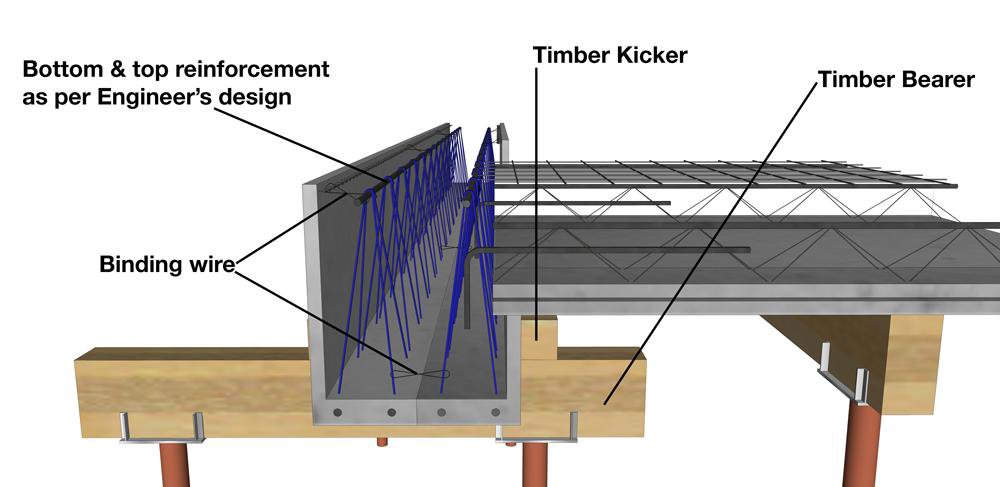
The system reduces waste by favouring timber saving
Efficient labour and time management
Shuttering is minimised, no stripping required
Carpentry costs are reduced
Minimal steel fixing on site
Off-steel shutter mold finish
When integrated with stairs and decking, the project can be cast in one pour, minimizing risks of cold joints and cracking
Should additional shear reinforcement be required, vertical stirrups can be inserted.